Rose Burbank's alcohol dependence
The Power of the Dog (Thomas Savage Edition)Rose Burbank's alcohol dependence is a concealed response to pain and pressure, but it also deepens her isolation inside the Burbank household. Whiskey briefly deadens her headaches and gives her courage to face Phil Burbank; afterward, secrecy and shame tighten around the relief, until Phil identifies her drinking and turns it into another weapon against her.
Pain, Relief, and an Earlier Memory
Rose's first resort to the liquor cabinet is set against a memory of Johnny Gordon near the end of his life. Although he had vowed never to drink again, she once found him pouring himself a drink. Startled, he stammered that he had a bad tooth and that the pain was nearly killing him. Rose had never judged him, and he had told the truth: the tooth was pulled. The remembered episode makes pain, rather than simple moral failure, part of the context in which Rose understands drinking.
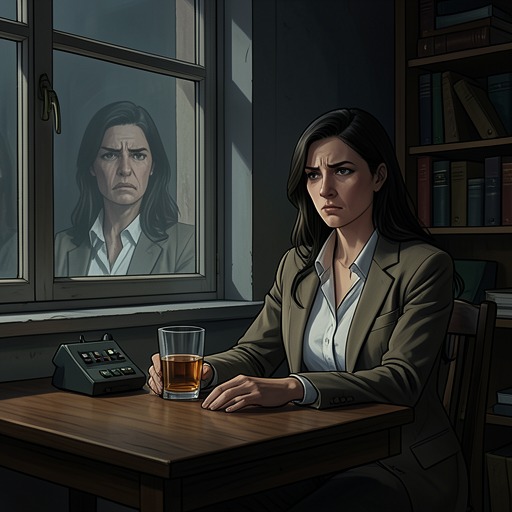
Now driven by what she experiences as the same need for distraction, Rose retrieves the key hidden in the china cupboard and unlocks the small door of the buffet's liquor cabinet. She hears Lola on the stairs, straightens until Lola passes into the kitchen, then crouches again and carries whiskey to the bathroom, shielding the bottle under her arm. Once locked inside, she drinks. The effort leaves her gasping; she presses her fingertips hard against her temples until white flashes seem to flicker in the darkness of her brain.
The whiskey works. Rose can regard herself calmly in the mirror, and she measures the headache against the pain of childbirth, an agony she remembers only indistinctly but believes was neither sharper nor as enduring. At the pleasant noon meal, George Burbank notices her apparent happiness, kisses her when no one else is in the dining room, and leaves whistling. After Lola clears the table, Rose returns the bottle and locks the cabinet. With the pain gone, she decides the relief was not worth the shame and promises herself she will not drink again. The resolve is sincere in that moment, but its condition is already visible: it holds while the pain is absent.
A Habit Organized Around Secrecy
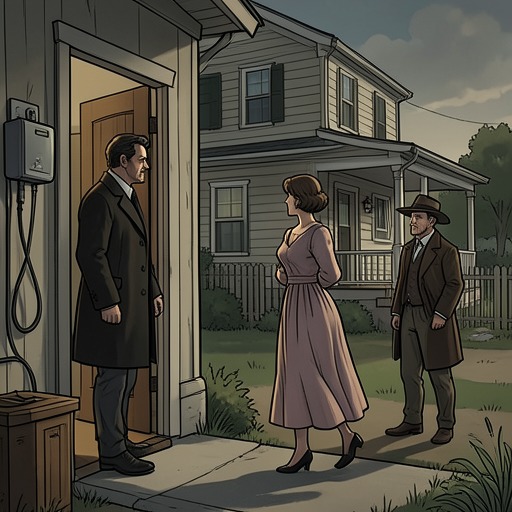
The next headache tests Rose's promise. She tries pointless walks across Sagebrush Hill, hoping fresh air and exertion will help; at first they do. Walking with Peter Gordon, she understands that the trouble is not only physical. Peter has observed that Phil makes her nervous, and Rose recognizes how much she dreads sharing meals with him. Each morning she worries about the noon meal; each afternoon, about supper. Phil's silences, crudities, scratching and snuffling, and habit of addressing George rather than her make the table a daily ordeal. Even the way Phil pulls out his chair and steps over it has become fixed in her attention, as has his description of beef as “a piece of cow.”
The headaches return in a cycle Rose cannot see ending. A walk with Peter may fail to console her, while the whiskey behind the locked door remains a known source of relief. Her drinking therefore becomes a private routine shaped by the household's daily schedule: the meals she anticipates, the cabinet she must unlock, and the need to avoid discovery. She worries that watering bottles will eventually be noticed if George offers a drink to a visiting friend.
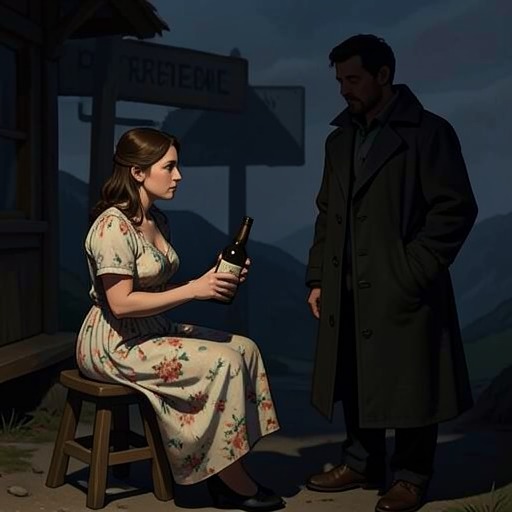
When Rose decides she needs the courage to speak to Phil, she again locates that courage behind the locked cabinet door. She changes her method of concealment: instead of watering the liquor, she takes a bottle, wraps it in a towel, and hides it in the bathroom clothes hamper, calculating that George will not miss one bottle. She intends to replace it. She also tells herself that after speaking to Phil she will stop deceiving people and confess the theft to George. The plan to confess shows that she recognizes the breach of trust, even as she makes another concealed use of the liquor to prepare for a confrontation.
Drinking and the Attempt to Face Phil
On the morning she finally prepares to speak, Rose drinks three times over its course. She masks the odor with a mint and feels calm enough to approach the day, but keeps her distance from Peter when he comes downstairs. The meal presents another decision shaped by Phil's expected arrival: whether she and Peter should sit down without him or wait, and whether having her son beside her would help. Small questions about table protocol loom large because, in her narrowed life, she has little else to anticipate besides the passing stagecoach and the next encounter with Phil.
Rose does speak to him. After a silence, Phil answers her request to explain himself by saying, “I dislike you,” because she is “a cheap little schemer” and because she gets into George's booze. He then looks back at his magazine. The accusation exposes the conduct Rose has tried to keep hidden, but it does not open a conversation: Phil names the drinking as a reason for his contempt and immediately withdraws his attention.
Rose touches her hair, carries herself as straight as she can, and returns to the pink bedroom. There, her shoulders sag; she feels cold despite the summer air and lies face down, dry-eyed and in shock. Sounds from the ranch—the bunkhouse latch, men shooting at magpies near the butcher pen, and their shouts—temporarily keep Phil's voice at bay. Her smile at the table had been meant to tell Peter she could protect him. Instead, Rose feels suffocated by the distance between that intention and what she can do, and shattered by loneliness. The episode links her drinking not only to headaches but to the courage she needs and the emotional collapse that follows when speaking does not change Phil's power over her.
Exposure and Phil's Contempt
Phil has noticed more than Rose knows. From his perspective, she has watered the liquor and taken a couple of bottles; he believes he can find where she has hidden them and decides to wait for her to expose herself. He treats her behavior as proof of an “alcoholic” personality and makes a mocking nickname of her drinking, “Boozy-Woozy-Rosie!” His interpretation is contemptuous, not compassionate: the dependence that Rose experiences as a way to manage pain and fear becomes, in his eyes, evidence with which to shame her.
Rose's secrecy persists after her effort to confront him. Phil watches her arrival at the cookshack and wonders whether she is still drinking; he recalls having confirmed that she watered the liquor and stole bottles. His suspicion establishes that the drinking has become a continuing pattern visible to him, even while Rose tries to hide it from George and maintain appearances around Peter. The locked cabinet, the towel-wrapped bottle, and the mint are practical devices of concealment, but they also mark the shrinking space in which Rose tries to control her pain. What begins as a temporary answer to a headache becomes inseparable from her dread of Phil, her efforts to protect Peter, and Phil's ability to turn private vulnerability into public humiliation.